Abstraction in C# is a key idea in object-oriented programming in C#.
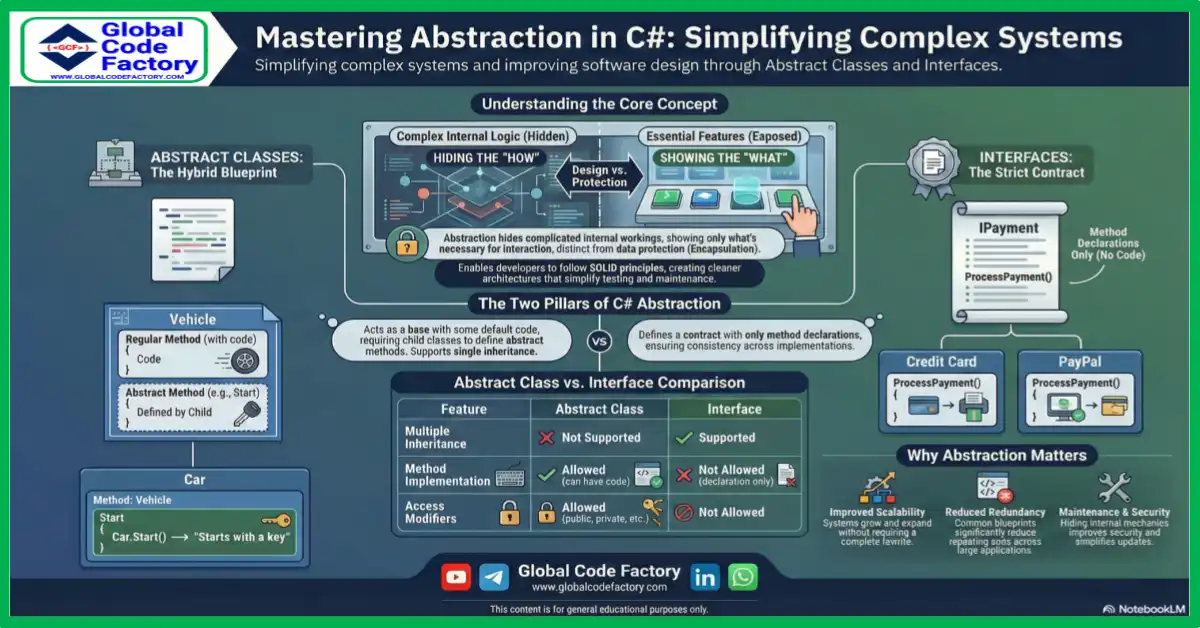
In simple words, abstraction hides the complicated parts of how something works. It only shows what’s needed to the user. This makes code easier to read and manage.
💡 Learn Visually:
If Abstraction in C# feels abstract, the video above shows how it works with clear and practical examples.
What Is Abstraction in C#?
- Abstraction in C# is about what an object does.
- This makes the code easier to read and structured better.
- It also helps reduce how components depend on each other.
- Because of this, applications are easier to update and maintain.
Abstraction in C# is achieved using:
- Abstract classes
- Interfaces
These are two main ideas in object-oriented programming in C#.
Why Abstraction in C# Is Important
Abstraction gives several advantages.
- First, it makes code more flexible.
- Second, it helps in making systems scalable.
- Third, it helps follow SOLID principles.
Other benefits of abstraction include:
- It reduces repeating code.
- It improves security.
- It makes code easier to maintain.
As a result, large applications remain stable over time.
Abstraction Using Abstract Classes
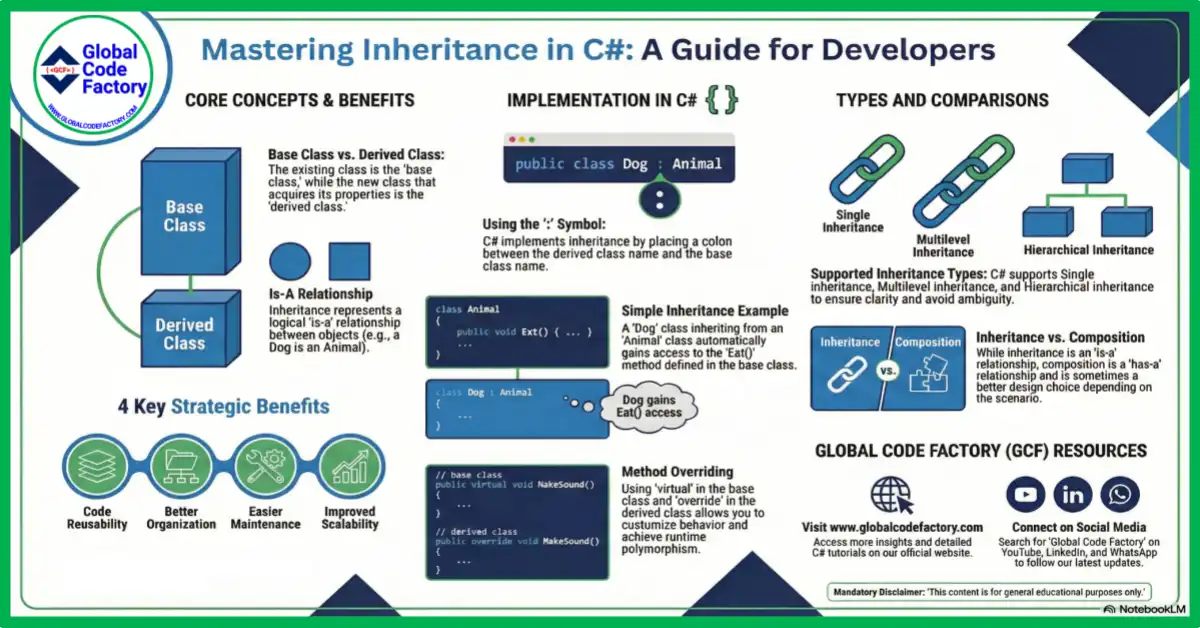
- An abstract class acts as a blueprint.
- It can have both abstract and regular methods.
- But you can’t create an object from an abstract class directly.
- Therefore, derived classes must implement abstract methods.
Example: Abstract Class in C#
In this example, the Vehicle class hides the complicated details.
The Car class provides specific behavior.
This effectively shows how abstraction works.
Abstraction Using Interfaces
- An interface defines a contract.
- It only includes method declarations.
- Therefore, it enforces implementation consistency.
- Interfaces can be used by multiple classes, so they support multiple inheritance.
- Because of this, they are widely used in big enterprise applications.
Example: Interface in C#
Here, the payment process is kept abstract.
But the way it’s implemented can change depending on the class.
This approach makes the system more flexible and easier to expand.
Abstract Class vs Interface
Therefore, the choice depends on design requirements.
Key Takeaways
- Abstraction in C# hides how things work.
- It improves how code is organized and maintained.
- Abstract classes provide some implementation.
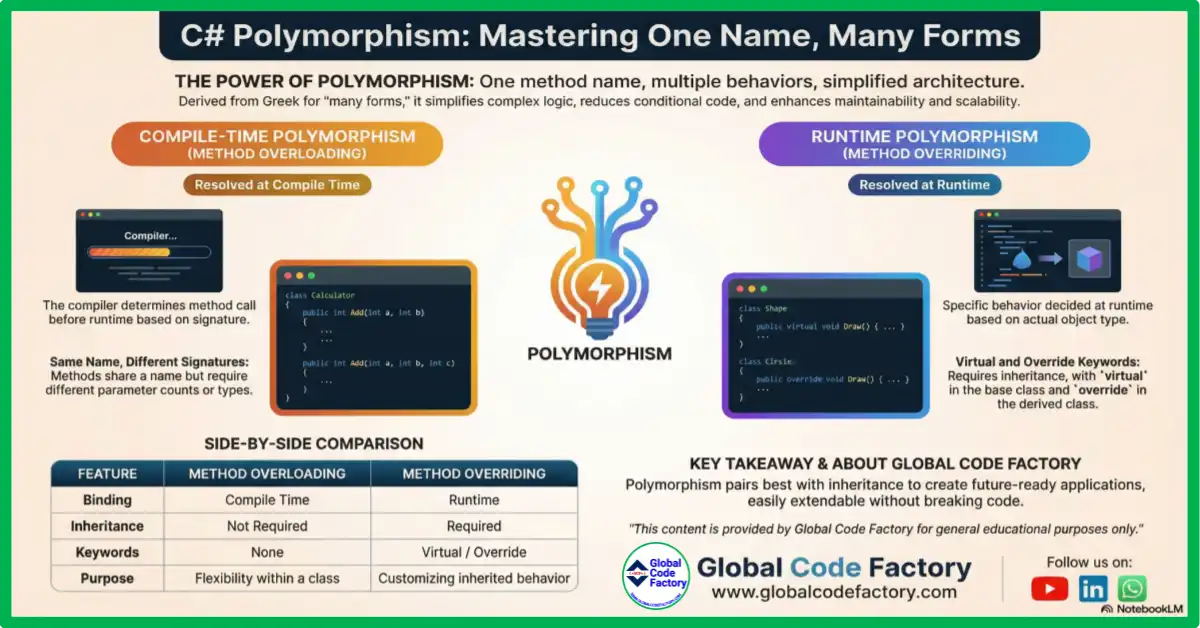
- Interfaces set strict rules for how classes behave.
- Abstraction is vital for building large, scalable applications.
Frequently Asked Questions (FAQ)
What is abstraction in C#?
- Abstraction in C# hides the complicated parts of code.
- It shows only the important parts.
- This makes it easier to use the code.
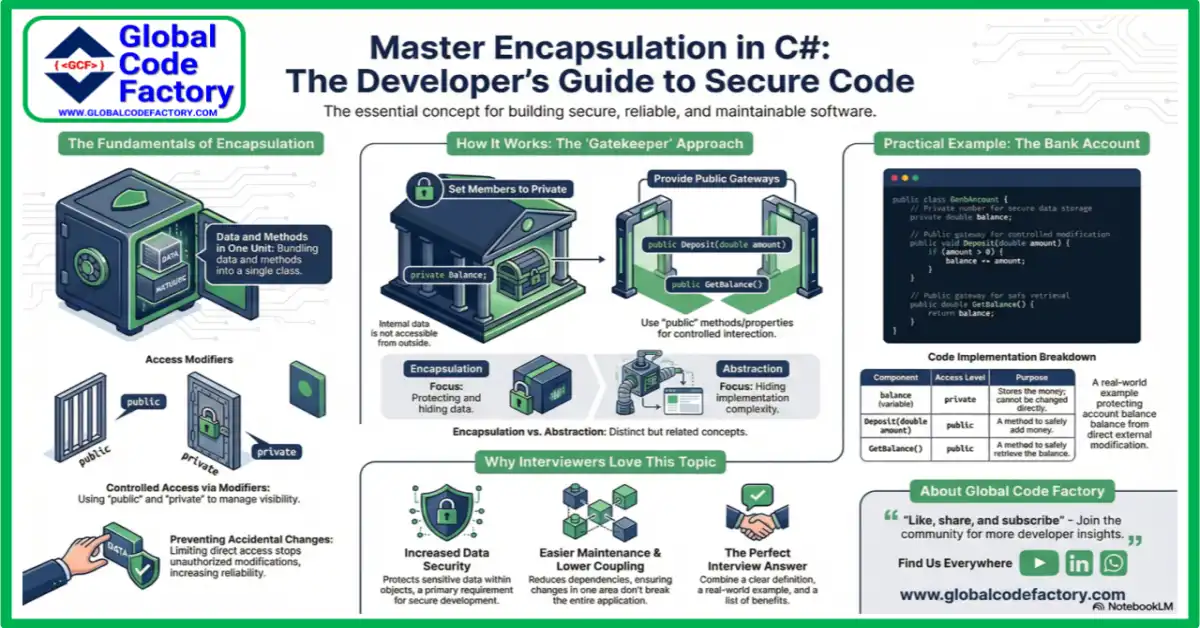
How is abstraction different from encapsulation?
- Abstraction is about how you design things.
- Encapsulation is about protecting data.
- Both are important parts of object-oriented programming.
Can we use both abstract classes and interfaces together?
- Yes, you can use both.
- This increases flexibility and improves the design of your application.
Is abstraction important for real projects?
- Yes, abstraction is very important.
- It helps create clean architecture and makes testing easier.
Abstraction in C# Interview Perspective
- Abstraction in C# is often asked in job interviews.
- Interviewers test both the theory and how it’s used in real projects.
- So, candidates should explain it with examples.
- They should also compare abstraction with encapsulation.
- This helps make the explanation clearer during interviews.